Is your
safety program
on the
right course?
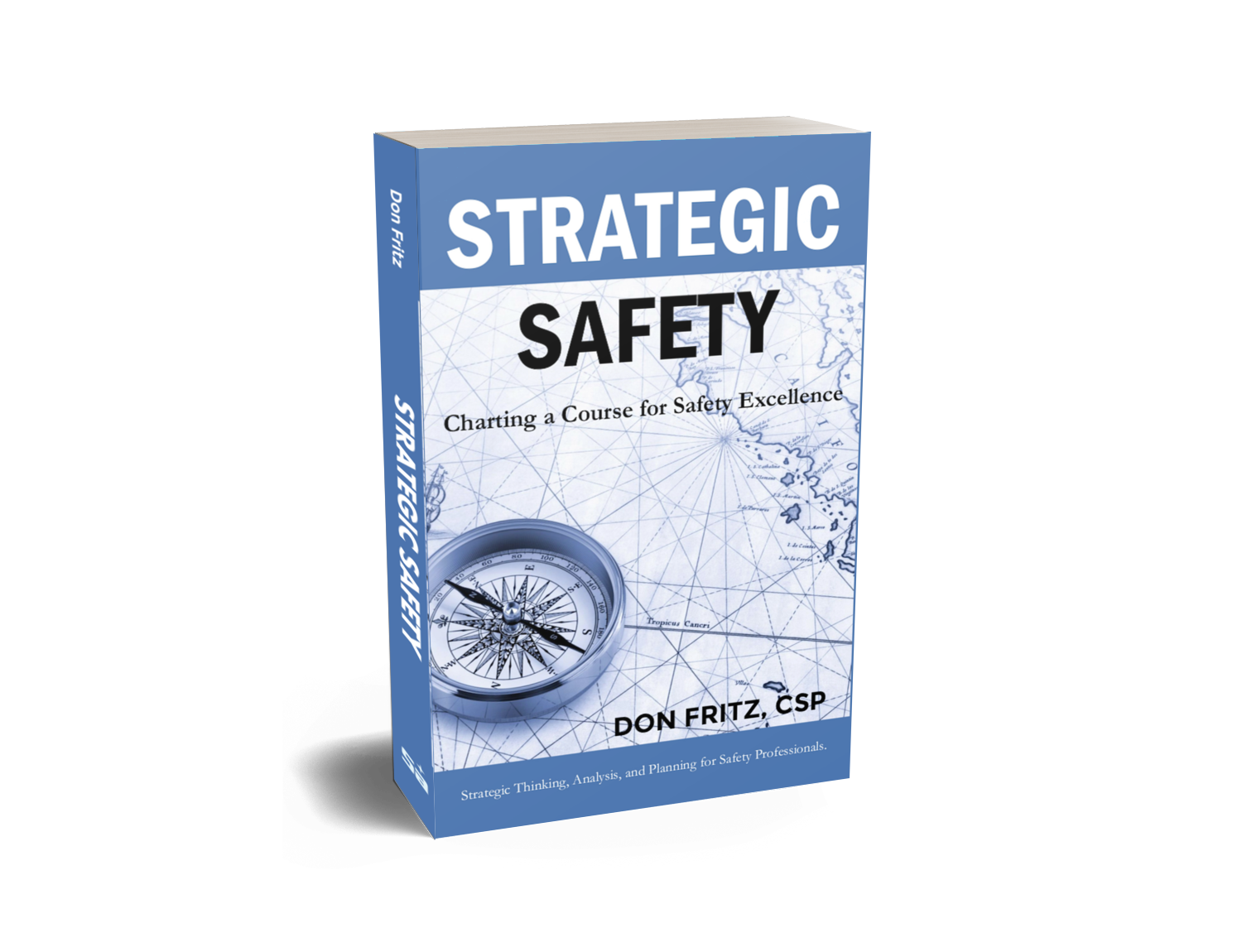
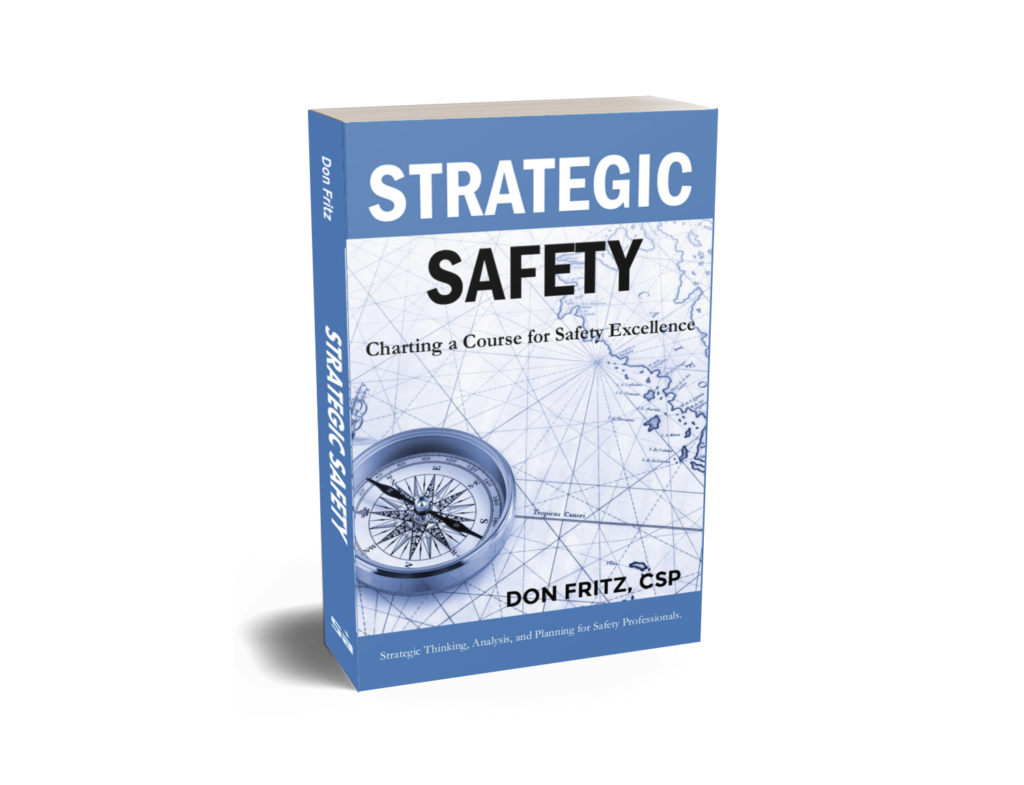
Strategic Safety will teach you how to Chart a Course for Safety Excellence!
(To be released on May 25, 2026.)
Strategic Safety
What is Strategic Safety? It is a systematic, exhaustive, and forward-thinking approach to safety management. It does not take the Whac-A-Mole approach to safety, only addressing problems as they arise. It does not take the brute force or shotgun approach, either, throwing anything and everything at a problem. Rather, it addresses safety problems proactively and strategically.
Strategic Safety is not a new school of thought regarding safety, such as the behavioral, cultural, and systems-based approaches to safety. It embraces those, but does not emphasize a certain aspect of safety. It is an approach to safety that uses the principles of strategy to drive continual improvement, and emphasizes achieving safety goals and objectives. Intrinsically, it is a deeper and higher level of thought pertaining to safety.
"Strategic thinking, analysis and planning for safety professionals."
Strategic Thinking
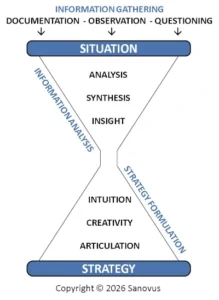
Strategic Safety defines strategic thinking as the ability to generate insights on a continual basis to achieve safety excellence. It presents a three-phase strategic thinking process that is similar to the three phases of the RCA process. The book demistifies the concept, using the construct of an hourglass, and provides simple ways to improve your strategic thinking skills.
Strategic Thinking Hourglass
- The first phase is information gathering, which is similar to the fact-finding phase of the RCA process.. It involves reviewing documentation, making observations, and asking questions.
- The second phase is information analysis. First you analyze the information and break it down into its constituent parts, then you synthesize those parts to create a new way of thinking about them to gain insights.
- The third phase is strategy formulation. It involves using intuition and creativity to formulate a strategic vision
Strategic Analysis
Strategic Safety presents techniques for analyzing the four Strategic Areas of Safety. Analysis is a detailed examination of something complex in order to understand its parts. The purpose of strategic analysis is to determine the state of your safety program, and identify areas you need to improve to achieve safety excellence.
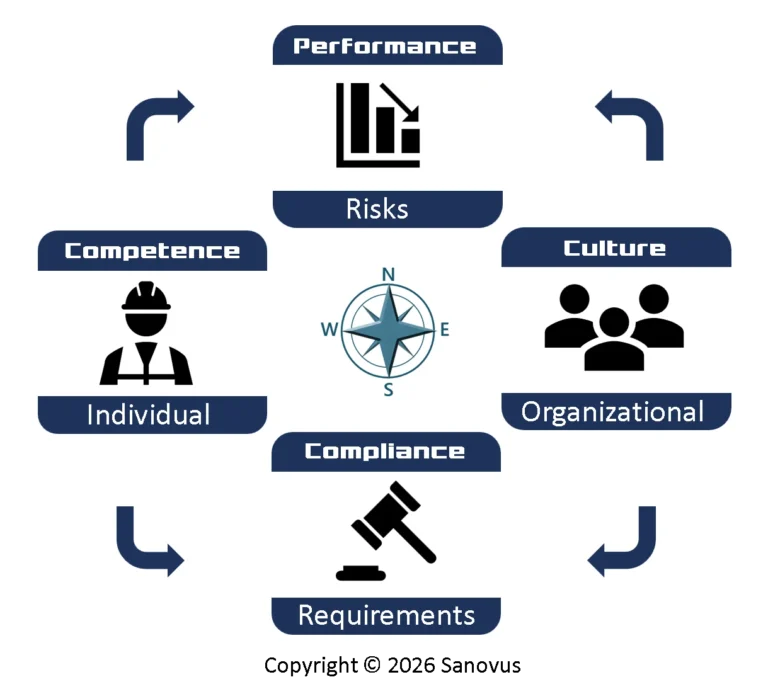
Strategic Areas of Safety
There are four strategic areas of safety that serve as focus areas for strategic analysis and planning. They act as cornerstones of a solid foundation for your strategy.
- Performance – This area focuses on analyzing hazards, and their associated risks, and developing plans to eliminate or mitigate those risks.
- Compliance – This area focuses on analyzing compliance with regulations, and developing plans to maximize compliance.
- Competence –This area focuses on analyzing the level of competency within your organization, and developing plans to maximize competence.
- Culture – This area focuses on analyzing the maturity of your safety program/culture, and developing plans for cultivating a better culture.
Strategic Planning
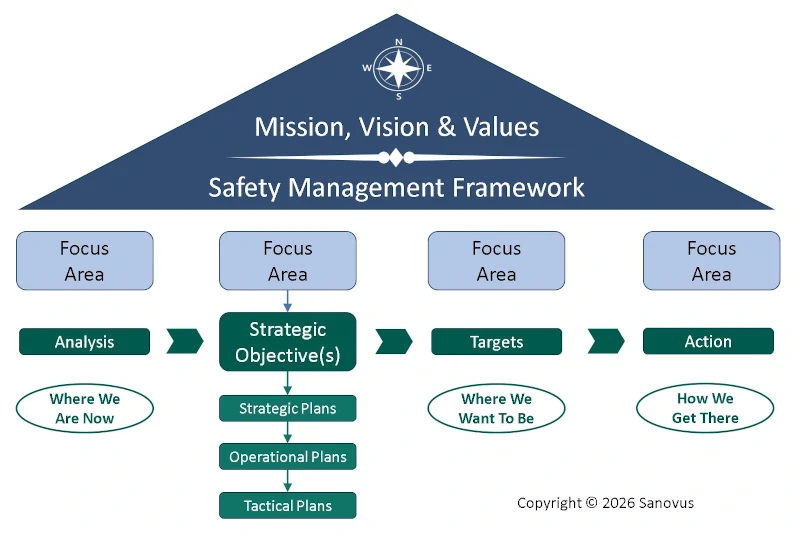
Strastegic Safety provides a systematic framework for strategic planning. Strategic planning answers the questions: “Where are we now, where do we want to be, and how do we get there?” It establishes the organization’s goals and objectives, then creates detailed strategic, operational, and tactical plans for achieving them.
Strategic Planning Framework
When performing strategic planning, it helps to have a solid foundation and well-structured framework to support and guide the process from start to finish. This book presents a framework to guide you through the process of identifying, analyzing, and selecting those strategic objectives that will help you realize your safety vision.
Safety Management Framework
A Safety Management Framework is a set of essential elements of an overall safety program. This book provides an example framework, and describes how to use it to assess compency levels and safety program/culture maturity.
Strategy Execution
Strastegic Safety not only walks you through the strategic planning process, it also lays out the key elements of an execution strategy. Developing your safety strategy is only half of the battle. The other half, and the more challenging half, is executing it. Studies show that 67% of strategies fail due to poor execution. This book teaches you how to bridge the infamous strategy execution gap.
Author's Note
Why I Wrote This Book
I am a Certified Safety Professional (CSP) who has spent over 25 years improving safety performance in heavy industries, including independent service providers for the power generation, oil and gas, industrial, and aerospace industries. In one role, I had divisional safety oversight of over thirty power plants, sixteen manufacturing and repair shops, and eight field service operations.
In that role, I participated in developing our corporate safety strategy, and helped numerous business units develop their own annual improvement plans. We had over fifty full-time safety staff throughout the organization involved in our annual planning process.
While completing that annual planning process, I noticed a general lack of knowledge and skills in strategic thinking and planning in our organization, myself included. This was apparent in the business units’ annual plans, which took a brute-force approach to improving safety. Unfortunately, I could not find suitable resources that taught safety strategy to help the organization be more strategic. This book is my way of closing that knowledge gap within the safety profession.
The discipline of strategy has such great potential for helping you achieve your safety goals and objectives, that it warrants making it an integral part of your approach to safety. In fact, it would benefit the safety profession if strategy became its own field of study within safety management, as it did in business management. Dare we call it “Strategic Safety?”